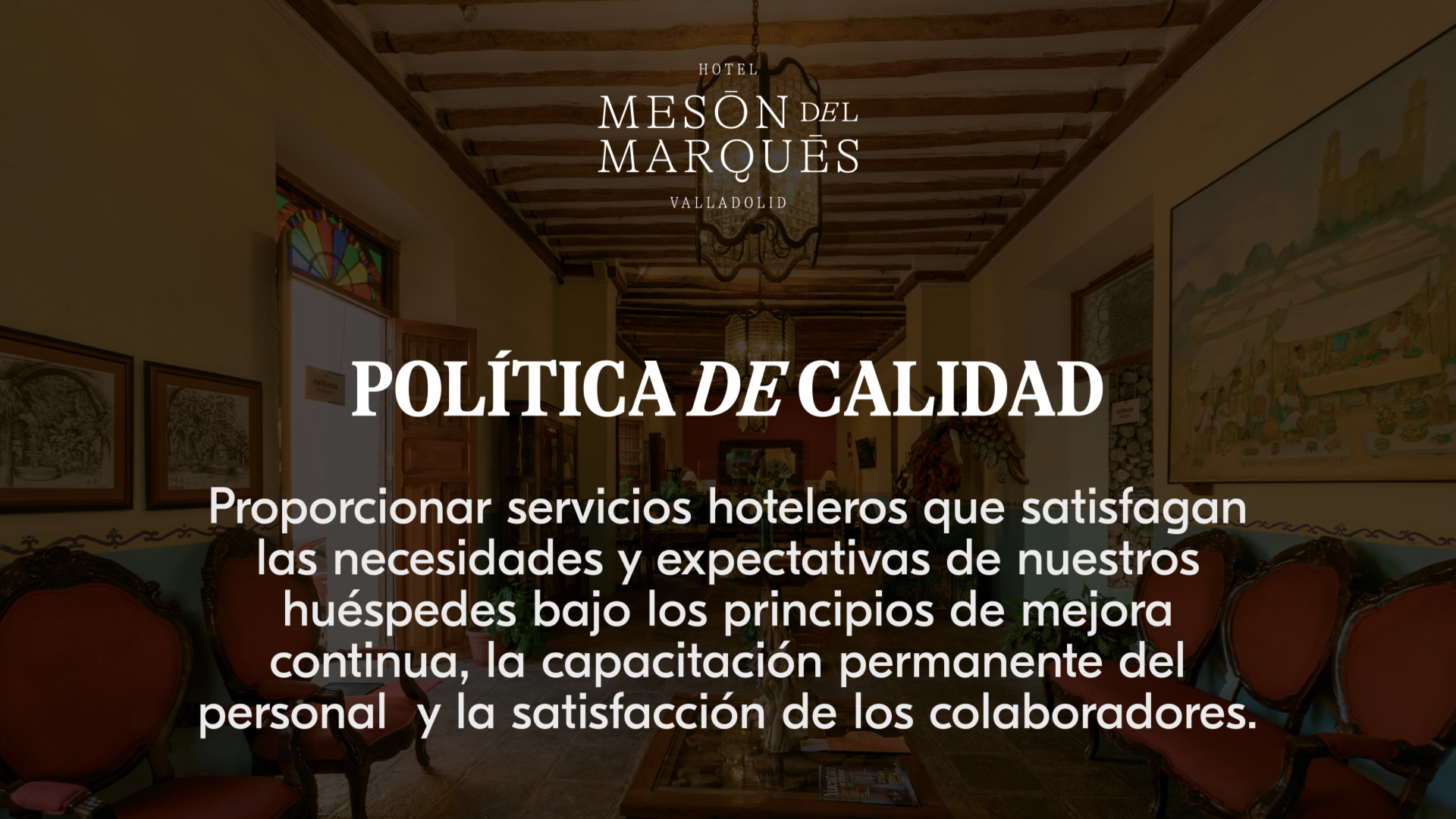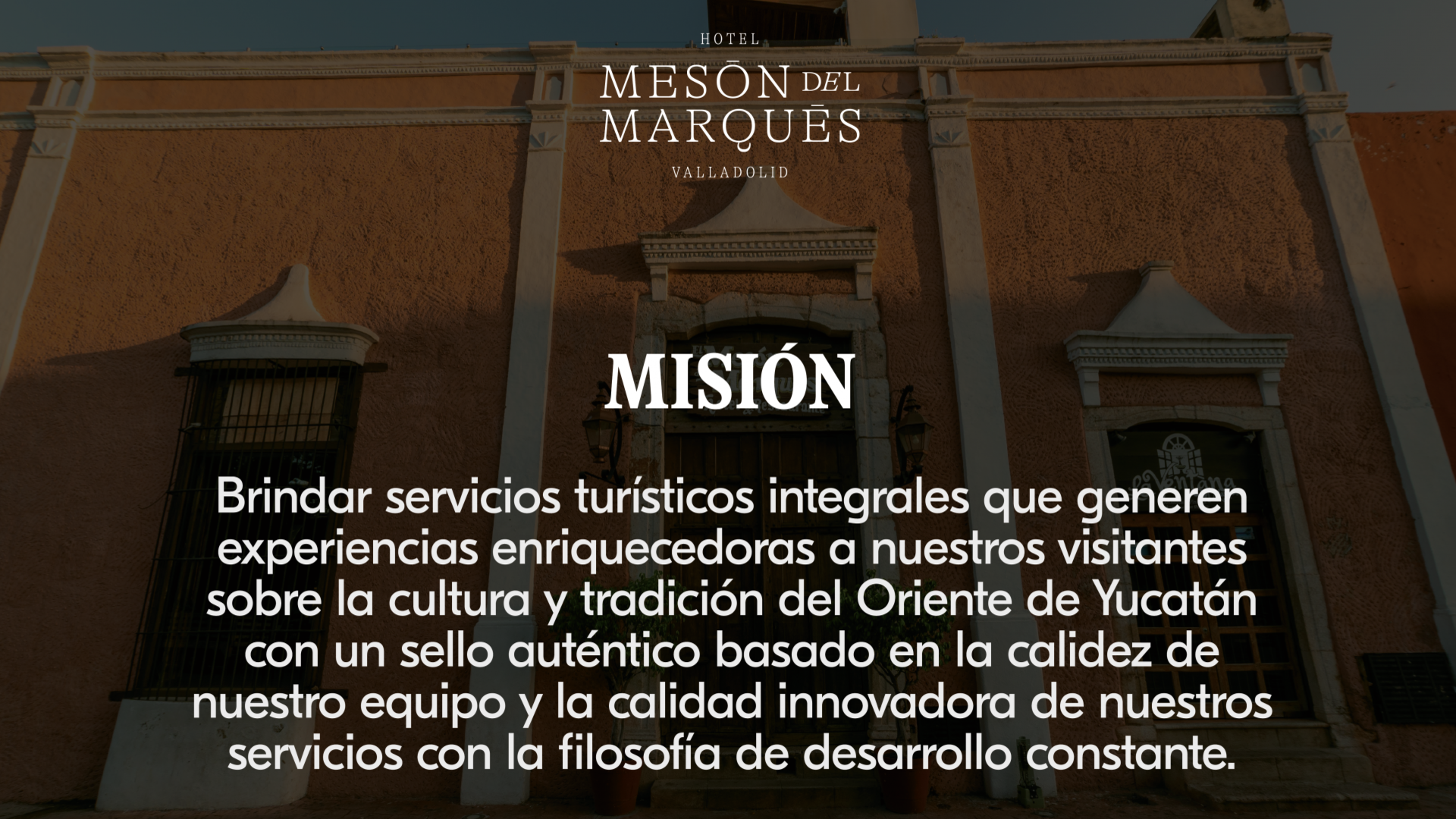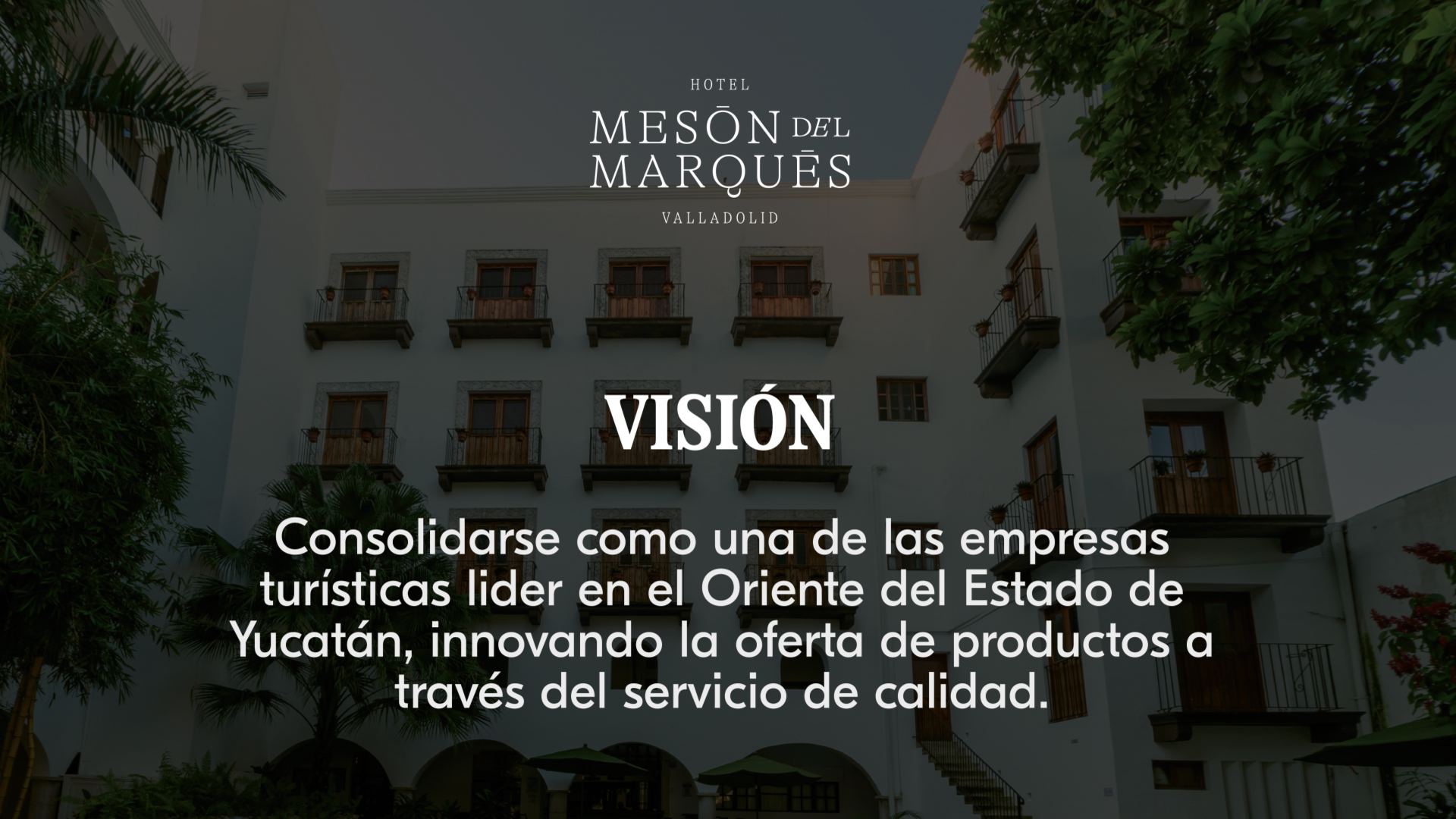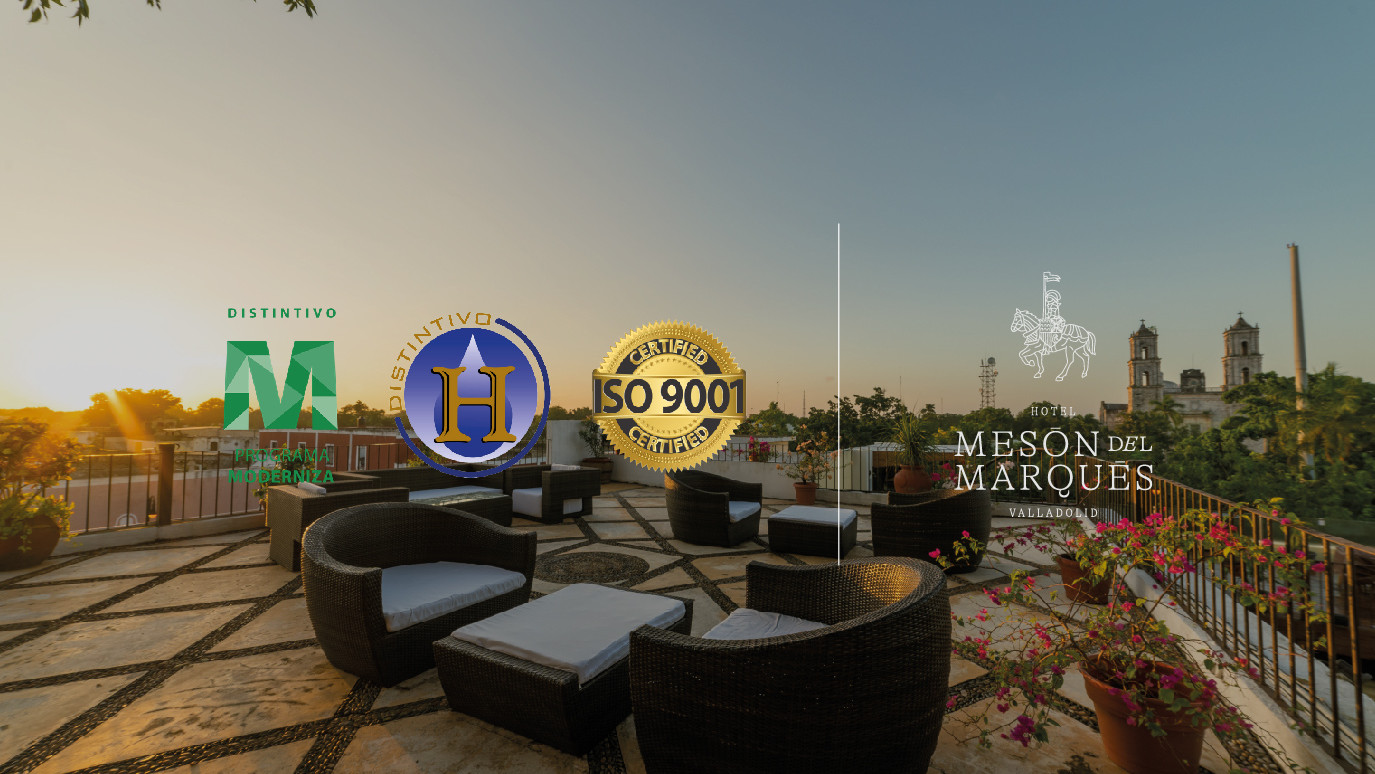
El Hotel Meson del Marqués es uno de los hoteles más tradicionales de Valladolid, pueblo mágico. Está ubicado justo en la plaza principal, se desarrolló en una antigua casona que data del siglo XVII donde la elegancia colonial se mezcla con las comodidades modernas, y que hoy, ofrece más de 50 años de experiencia.
Considerado el hotel más cálido y romántico de Valladolid, por propios y extraños, se encuentra en la ubicación ideal para recorrer todos los lugares típicos de la ciudad como sus barrios antiguos y la Calzada de los frailes, y también de Yucatan, como Chichen Itza, Ek Balam, Coloradas y más.
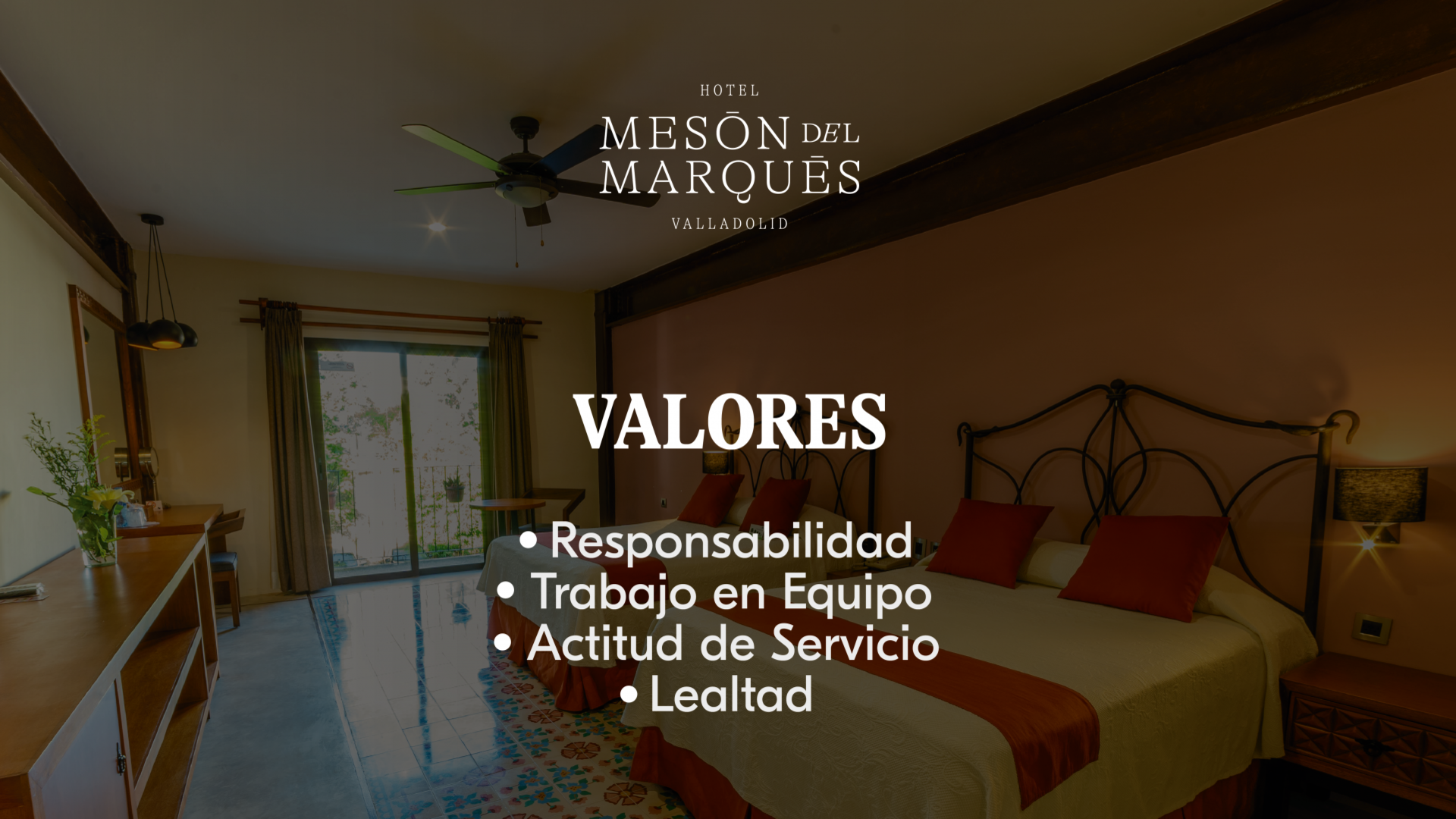
Nuestras 85 habitaciones incluyen cuentan con todo lo necesario para hacer de tu estancia inolvidable, ya sea vengas con tu familia, tu pareja o por trabajo.
Orgullosos poseedores de los Distintivos H y M, Certificado de Buenas Prácticas Sanitarias Yucatán, Premio Yucatán a la Calidad y el ISO 9001:2015 estamos seguros que podremos satisfacer hasta al más conocedor de nuestros huéspedes.


Amenidades
02 RESTAURANTES
BAR
TERRAZAS CON VISTA A LA IGLESIA DE SAN
SERVACIO Y EL PARQUE FRANCISCO CANTÓN ROSADO
PISCINA AL AIRE LIBRE
JACUZZI
SERVICIO A LA HABITACIÓN 24HRS
ESTACIONAMIENTO INTERIOR
RECEPCIÓN 24 HRS.
ACCESO A INTERNET WIFI
SERVICIO DE LAVANDERÍA
SERVICIO DE DESPERTADOR
VISITA UN PUEBLO MÁGICO DE MÉXICO
Habitaciones
Contamos con 90 cómodas y agradables habitaciones clasificadas de esta manera: Estándar, Superior, Superior Ejectuivas, Junior Suite y Master Suite, las cuales cuentan con baño privado con regadera o tina, amenidades, tocador, aire acondicionado, internet inalámbrico, teléfono y televisión por cable entre muchas otras comodidades, para hacer su estancia agradable y placentera en nuestro hotel. cabe aclarar que todas las habitaciones, aún dentro de la misma clasificación, son diferentes entre sí. hoy en día, nuestras habitaciones pueden ser reservadas fácil y rápidamente a través de nuestro sistema de reservaciones en línea.
Sumamos el romanticismo y la arquitectura colonial del Yucatán antiguo con las comodidades del mundo moderno rodeados de vegetación y hermosas vistas desde nuestras terrazas al parque Francisco Cantón y la Iglesia de San Servacio.
Cada una cuenta con:
- TOTALMENTE CLIMATIZADAS
- TV PANTALLA PLANA CON SEÑAL SATELITAL
- RELOJ DESPERTADOR
- CAJA FUERTE
- TELÉFONO
- SECADORA DE CABELLO
- ESPEJO DE VANIDAD
- TOCADOR CON ESPEJO
- BATA DE BAÑO
- MINIBAR (ALGUNAS HABITACIONES & ARTÍCULOS EN CORTESÍA EN SUITES)
- CAFETERA (ALGUNAS HABITACIONES)